Partial eclipse: the ring will not be visible
- Obscuration
- 18.1%
| Phase | Sun altitude | |
|---|---|---|
| Begins | 14:14:22 UTC | 53° |
| Maximum | 15:42:27 UTC | 75° |
| Ends | 17:09:53 UTC | 84° |
The nearest totality is 2,393 km to the southeast.
In La Paz the Moon will cover at most 18% of the Sun, at 11:42 BOT. The ring of fire will not be visible.
| Phase | Sun altitude | |
|---|---|---|
| Begins | 14:14:22 UTC | 53° |
| Maximum | 15:42:27 UTC | 75° |
| Ends | 17:09:53 UTC | 84° |
The nearest totality is 2,393 km to the southeast.
Shown with the zenith at the top, as you will see it in the sky. Sizes and positions are computed; brightness is illustrative.
At maximum the Sun will be 75° above the horizon, to the east. Find a spot with no buildings or hills in that direction.
 La Paz
All cities: annular eclipse 2027 →Moon phases in La Paz →
No, never. Even during the ring of fire about 14 % of the Sun stays visible, enough to damage your eyes. Use glasses certified to ISO 12312-2 or a pinhole projector. Ordinary sunglasses do not protect you.
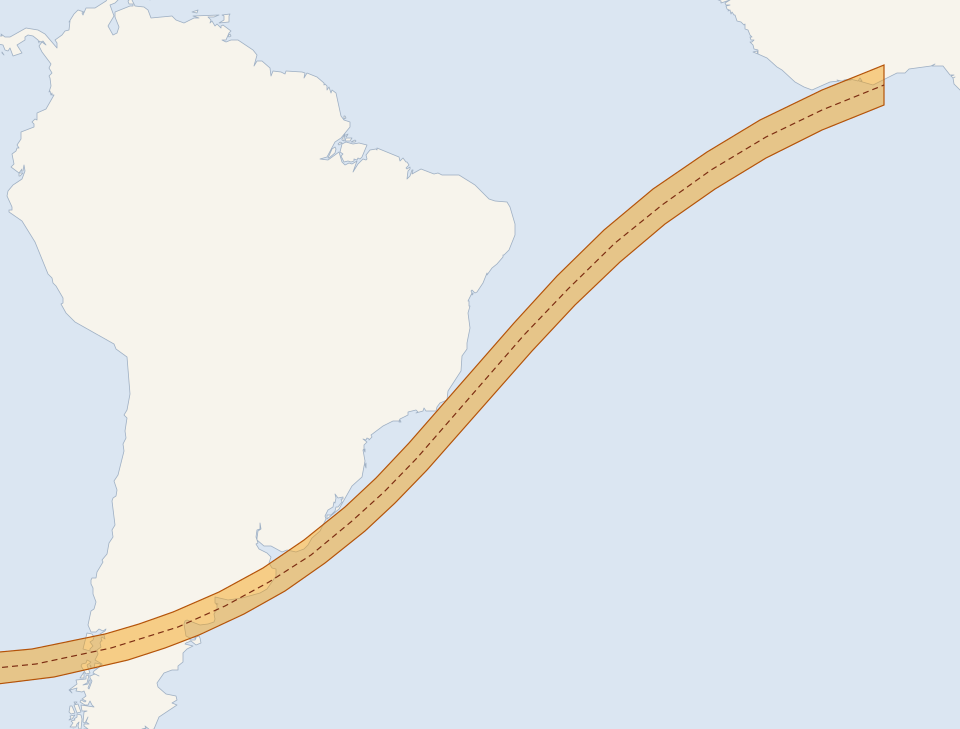
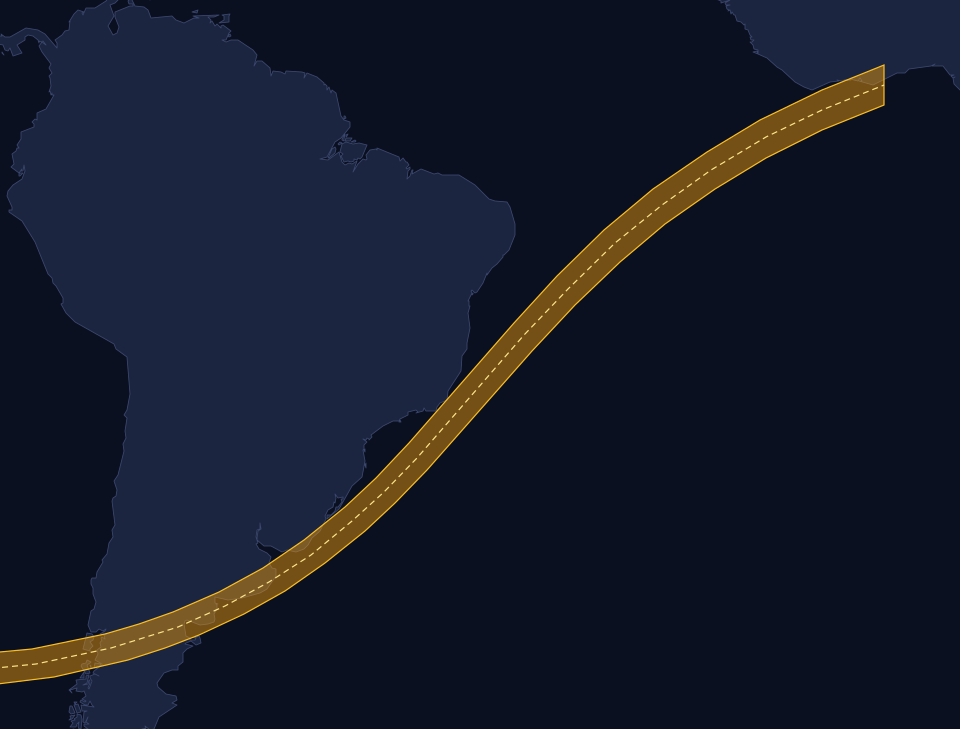
Around midday in South America. In Mar del Plata it starts at 10:45 and the ring lasts from 12:24 to 12:32 (ART); in Buenos Aires the maximum is at 12:32, in Maldonado the ring is at 12:36 (UYT) and in São Paulo the maximum is at 13:22 (BRT). In Ghana the ring arrives at 17:50 (GMT), just before sunset.